“You must maintain unwavering faith that you can and will prevail in the end, regardless of the difficulties, and at the same time, have the discipline to confront the most brutal facts of your current reality, whatever they might be.”1
Introduction
The UK’s Ministry of Defence is in the midst of a reorganisation of its capability management and acquisition functions. Again. If the answer was to simply get the right organigram to make Defence Procurement effective then we may well have stumbled across it by now, if only by accident. It is likely, therefore, that to provide the nation with what is expected from its Defence Procurement enterprise requires deeper analysis.
This paper will argue that the benefit of divining the optimal organisation and processes is marginal. There is a lot of talk, from Ministers and officials, about looking for the 80% solution in Defence Procurement.2 They should take exactly this approach with their organisational structures. Pick one that is good enough and then, frankly, get on with it. We are nearly two years into the Defence Reform programme and, at the time of writing, many key decisions about how the system will work in practice are yet to be resolved and implemented. This is hardly moving at the “speed of relevance”.
Rather than obsessing over organisational diagrams and ‘value chains’, it seems apparent that the real challenge is to make clear and timely decisions about what capability is to be procured, and what is not; allocating the necessary resources;3 and then allowing competent and experienced professionals to get on with the business of transforming taxpayers’ cash into usable capability for employment in the pursuit of Government policy outcomes through the military instrument. There is a substantial body of evidence about what is required for successful delivery in complex programmes. For reasons of political expediency, the brokering of competing agendas and the management of resource scarcity, the Ministry of Defence often fails to set such conditions, with depressingly predictable outcomes.
Definitions
Before launching into the discussion proper, it is worth ensuring that both the author and the reader have a common lexicon. These definitions are taken from the MOD’s Knowledge in Defence (KiD) database4:
Capability: “The ability to generate an operational outcome or effect. In the context of Defence planning, Capability is the enduring ability to generate a desired effect”.
Capability Management: “How Defence develops, delivers, generates and operates Military Capability through life to meet the Strategic Requirements and Objectives that articulate Defence Policy”.
Acquisition: “working with industry to provide the necessary military capability to meet the needs of the Armed Forces now and in the future. Includes: Setting of requirements; Selection, development and manufacture of a solution to meet those requirements; Introduction into service; and Support of equipment and other elements of capability through life to disposal”.
In this context Defence Procurement will be taken to mean the totality of strategic planning and Force Design, capability management through-life, and acquisition activities undertaken by MOD.
Defence Lines of Development (DLODs): these are the components of capability, the elements that need to be brought together and integrated to deliver capability. For the UK, the Defence Lines of Development are: Training; Equipment; People; Infrastructure; Doctrine and Concepts; Organisation; Information; and Logistics.
What does good look like?
Major project delivery is like making sausages. The product is often a lot more edifying than the process. That is to say that the outcomes of many major programmes are considered successful with hindsight, whereas they were problematic during the course of delivery. Examples such as the Sydney Opera House, the London Olympics and many, many others stand as object lessons. Indeed, only about 1 in 200 or 0.5% of megaprojects5 fall within the so-called Iron Triangle of project delivery parameters: performance, cost and time.6
We should not be surprised then, given that Defence programmes constitute around 90% of the Government’s Major Project Portfolio, that there are many examples of large Defence projects that fail to meet the originally stated ambitions. Sometimes this is because the original aspirations were unrealistic, sometimes it is through poor delivery, and sometimes it is a combination of the two.
In thinking about criteria for success, it must be recognised that there are inherent competing tensions within the MOD Procurement system that are contradictory and must therefore be addressed by judgement. These are problems to be managed, not puzzles to be solved. Such a distinction is more than sophistry; it informs the fundamental approach that must be taken to resolving such tensions for each specific instance. Not everyone will get what they want and allowing rapid decision making is often more important than searching for an optimal balance or consensus. Good enough must be good enough.
These tensions become apparent when considering such issues as whether to procure a new system from a domestic supplier to meet the UK’s requirements, or to purchase an existing system from the international market based on existing production facilities. The latter course of action may well be lower risk, lower cost and faster but is unlikely to offer sovereign capabilities, export opportunities, UK jobs, intellectual property transfer (allowing for sovereign adaptation) and it creates dependencies on overseas supply chains. Similarly, there are competing tensions when the MOD considers whether it should procure a new system from strategic industrial partners, securing national industrial capability, or to compete the requirement, allowing new market entrants to disrupt the industrial status quo with new approaches and technology.
“In thinking about criteria for success, it must be recognised that there are inherent competing tensions within the MOD Procurement system that are contradictory and must therefore be addressed by judgement. These are problems to be managed, not puzzles to be solved.”
Other tensions arise when one considers risk appetite and innovation. There are political imperatives for Defence to be a conservative organisation that makes no mistakes, denying political opponents and media sensationalists the opportunities for attacks. This also applies within the MOD where different organisations compete for their share of the Defence budget and seek opportunities to build their case at the expense of other parts of Defence. Once set by the Treasury, the internal allocation of the Defence budget is a zero-sum game and the tribes, predictably, compete to maximise their control over resources and their professional jurisdiction.7 Such incentives are powerful drivers of behaviour, irrespective of the Defence Procurement system in vogue at the time: “Culture eats strategy for breakfast”8 – behaviour begets culture and incentives beget behaviour.
The rational response of the functional9 actors in such an organisation is to seek the highest levels of assurance and quality in the performance of their professional functions. This is how bureaucracy grows; it is fractal.10 That is to say, self-similar at differing scales. As you ‘zoom in’ on a process you will find, in increasing resolution, layers of process and risk that need to be managed, quantified and assured. By doing this you get an increasing ‘quality’ of process where more variables are found to be controlled and increased layers of assurance and governance are required. And so the bureaucracy grows.
This is not an irrational proposition, especially for the functional process owners11 whose responsibility to the organisation is not for its outputs but for having the highest quality functional processes possible. This is what the system demands of them and, as professionals, what they take pride in delivering by reviewing their processes, addressing any identified shortcomings, and creating a higher quality process. Owing to the fractal nature of bureaucracy, this leads to a geometric increase in process and management overhead in an organisation over time and in each iteration of change. And it is a one-way valve, a diode. It goes against the grain to say to someone “reduce the quality of your process by zooming out and dealing only with those issues which are visible at a macro level”.
Such a ‘Functional’ organisation is likely to be paralysed – unable to make rapid decisions and take proportionate risk in the pursuit of success. In military terms, it is not an organisation that is likely to generate a capability advantage over its adversaries. Thus, we see strategic leaders rail against the macro effects of the bureaucracy inherent in the system, which stifles the pace of progress and erodes efficiency. In other words, they can see the macro cost to the organisation of bureaucratic inertia: costs which are hidden from the process owners at the local level whose primary focus, quite naturally, is the quality of their process, not the pace and efficiency of output delivery.
The alternative is an organisation that is risk-tolerant (within certain bounds). An organisation that prefers imperfect success to compliant failure. In the modern management zeitgeist, such organisations are often called ‘Agile Organisations’ (sic), and this is often (irritatingly) conflated with specific iterative product development techniques derived from the software industry. Such category errors are common and mask the real challenge of creating risk-tolerant and adaptive bureaucracies.
The challenge for Defence is that many of the risks being managed, both in major project delivery and in the operation of the Armed Forces, are low probability but high impact events (so called ‘tail risks’).12 In complex systems such risks do not scale linearly:
“Complex systems are full of interdependencies – hard to detect – and nonlinear responses… Man-made complex systems tend to develop cascades and runaway chains of reactions that decrease, even eliminate, predictability and cause outsized events.”13
The military deals with such realities by having an obsession with ensuring that minor details are attended to instinctively and culturally. Hence the obsession with discipline, inspections, standards and compliance. The same is true of many other safety critical industries such as aviation, space and offshore oil and gas, although the cultural manifestation is distinct in each case.
To resolve this paradox, the Accountable person for the delivery of an activity must be empowered to make the judgements about how much risk to take against functional processes in order to pursue their mandated outcomes at a tolerable level of risk. This necessitates a fine judgement for applying the minimum necessary functional control, be that project delivery, commercial, legal, safety engineering, or whatever, commensurate with the risk appetite to achieve the required outcomes. Such judgements can only be made by the owners of the outcomes – in Government project delivery parlance, this is the Senior Responsible Owner (SRO) – and not the Function owners. Currently the Functions hold a veto over such executive authority, skewing the organisation towards a preference for compliant failure rather than imperfect success.
The alternative model already exists in Defence in the sphere of military operations, where the operational commander at Unit, Formation or Theatre level holds the authority to make such risk judgements in the application of the Forces under their command to achieve their mission objectives. That said, it should be noted that the growing prevalence of networked information technology is increasing the bureaucratisation of military operations. Nonetheless, such commanders are appointed for their professional competence and expertise in their military domain. A similar selection and empowerment of those charged with delivering major government programmes in Defence could yield similar benefits.
Such Senior Responsible Owners (SROs) would need equivalent levels of professional competence in project delivery, commercial, finance, engineering, etc as, say, the Commanding Officer of a warship is expected to have in seamanship, warfare, engineering, logistics, aviation, etc. The qualification and appointment of such leaders should be done with the same care and expectations of personal accountability and authority as for military commanders of equivalent rank.
To resolve this paradox, the Senior Responsible Owner must be empowered to judge how much risk to take against functional processes in pursuit of their mandated outcomes. Currently the Functions hold a veto over such executive authority, skewing the organisation towards compliant failure rather than imperfect success.
Underlying Causes – why is this so hard?
There is always more to do in Defence than there are resources. The UK Armed Forces do vital work securing and defending the nation’s interests and deterring threats in peacetime – but their fundamental role is that of the responder of last-resort in time of crisis. By the nature of such crises, it is impossible to predict with any certainty when and where they may emerge, and what the precipitating events may be. The MOD must therefore prepare for a range of contingencies, against a variety of adversaries, and in a number of operational theatres. There will never be enough resources to cover every eventuality, and so MOD planners must hedge their bets.
Strategic Defence Reviews set the broad policy frameworks within which Defence must make such choices, but these have a long history of failing to make the meaningful decisions necessary to provide unambiguous direction. They are good at saying what MOD should do, much less good at saying what MOD will stop doing to balance the books. Strategic Defence Reviews are normally followed, therefore, by a financial programming exercise where something approaching an affordable capability programme is presented to Government for endorsement.
Previously, the Department and, indeed, the individual service chiefs under the Levene model,14 have accepted budgetary delegations which have been inadequate to deliver the agreed programme. Often this inadequacy is masked by vague promises of ‘efficiencies’ or ‘transformation’ as a sticking plaster to mask the differences. Of course, this is not to say that MOD should not be more efficient in its bureaucracy, as argued above, but using this as magical thinking to make a budget shortfall disappear is abrogation, not leadership.
The consequence of this is that the MOD is trying to do more – across its whole programme – than its resources allow. This leads to a series of annual processes to attempt to balance the books where, early in the financial year, savings targets are applied to people trying to actually deliver capabilities. Such capabilities might be new-to-Service acquisitions or in-service force elements being generated for operations. Such spend control measures are deliberately designed to slow down the spending of money. This happens every year. By putting the brakes on, attention is diverted from delivering the capabilities to slowing delivery to find savings – or justifying why this cannot be done. The delays and additional work cost money and consume staff effort. All this is pernicious and has resulted in a whole system designed to do the opposite of what MOD says it wants: a rapid and efficient procurement system. And we wonder why Defence programmes are so often late and over budget!
One of the effects of this phenomenon is that more projects are initiated than are affordable. There is a familiar pattern. The project for a new or replacement capability is initiated by a Strategic Defence Review – or an ambitious officer’s interpretation of one. The capability sponsors work on the Concept phase of the programme, consulting with industry, framing requirements and generating options to deliver the effects needed. This phase will also refine the costs of delivering what is needed across all of the Defence Lines of Development.
Some of this estimation will have been done, of course, in arguing the programme into the SDR, but it will have been of very rough order. And, whether wilfully or not, the temptation will have been to lowball the estimate to make the programme attractive to decision makers. This is a theme that will continue through each stage of approvals. Whether by delusion or deception,15 there is a strong tendency to underestimate the challenges at the start of projects or when seeking approval.
The MOD is trying to do more than its resources allow. Annual processes attempt to balance the books by applying savings targets to people trying to deliver capabilities — measures deliberately designed to slow spending. By putting the brakes on, attention is diverted from delivering to finding savings. The result is a system designed to do the opposite of what MOD wants: a rapid and efficient procurement system.
Once the Concept phase is underway, permission will be sought to proceed to the market to seek solutions for the capability need. It is neither lawful nor ethical to solicit tenders for contracts that the organisation doesn’t have the wherewithal to pay for. At this point there is frequently a stall as the mismatch between capability, ambition and the allocated finances becomes apparent. There are two ways this can be addressed: either reduce the requirement and/or scope of the procurement or bid for more money.
Knowing money is scarce, capability sponsors will often revisit the requirement by requesting a capability investigation and operational analysis from the Defence Science and Technology Laboratory (DSTL), the MOD’s in-house science and technology organisation. (Under the new model, this will instead be revisited by the National Armament Director (NAD) Group’s Options Team.) The hope is that a more affordable means of meeting the need can be found by the adoption of different technologies or techniques. Usually, the bill goes up as the threat has evolved. More money is then bid for in the subsequent Annual Budgetary Cycle.16
We are now, typically, a couple of years on from the latest SDR; an election is looming and another SDR is planned on the other side of it. Hopes are pinned on that exercise giving the project the necessary momentum to get it across the start line proper. This is happening with dozens of projects across the Defence portfolio. These effects are exacerbated by the cost growth that emerges from in-flight programmes where promises and commitments previously made are not met by delivery to cost, time and/or performance. The causes of this can be the same delusion and deception effects described above, anchored in the initial overoptimistic estimates, which propagate through the process, amplified by suppliers overpromising to win the contracts.
In addition to the incentives for being overly optimistic in forecasting, there are innate human biases and technical reasons why this is so. In March 2017 Melissa Dahl penned an article for NYMag.com entitled Everything Always Takes Longer Than You Think.17 She highlighted a body of work, notably by Daniel Kahneman and Amos Tversky, that reveals a cognitive bias known as the Planning Fallacy. Essentially, this bias leads us to be overly optimistic about how long tasks take to achieve. In fact, as Oliver Burkeman wrote in the Guardian in 2008,18 this effect is present even when you are aware of the fact that the task you’re embarking on will take longer than you think and so you adjust your estimate accordingly (known as Hofstadter’s Law). This should be considered by Portfolio Directors19 when planning their resources and assessing the affordability of programmes within their portfolios.
From a more technical perspective, the way risk is calculated excludes ‘tail risks’. Carrying risk provision for runaway inflation, war, pandemics and so on is judged too expensive for individual programmes and is therefore accepted at risk by the Department. This has real consequences, however, as we saw in the post-COVID surge in inflation that arose from both the supply chain disruption of the pandemic and the Russian invasion of Ukraine; no relief for the inflation above planning assumptions came from the Treasury, placing significant affordability pressure on the MOD’s programme.
The other factor is that risk modelling assumes that risks are independent of each other; i.e. if one thing goes wrong it does not have an impact on the likelihood of other things going awry. In reality, of course, the more complex the project, the more interdependent the risks and the cascade effects described above multiply. Megaprojects that go wrong tend to go spectacularly wrong!
In addition, estimates of risk are generally built from the bottom up. A reductionist approach is absolutely necessary to break down a large, complex task into manageable work packages and jobs that can be subcontracted out or allocated to different divisions of the workforce – even down to individual workers. These tasks need to be coordinated, resourced and their interdependencies managed. Planning will help to achieve this but the more complex the programme, the more fragile that plan will be to contact with reality: “Any complex project is subject to myriad problems – from technology failures to shifts in exchange rates to bad weather – and it is beyond the reach of the human imagination to foresee all of them from the outset.”20
The plan, therefore, cannot be a reliable indicator of the outcome at the early stages of a programme. It will contain only what is known. We might understand that a certain task needs to be performed and have a reasonable grasp of its time and cost. To borrow from Rumsfeldian logic, let us call this a known-known. A known-unknown would be something that we know needs to be done but (perhaps because we are doing it for the first time) are unsure about the resources necessary to achieve it.21 Assuming that we can satisfactorily quantify this uncertainty, it can be classified as a risk and managed accordingly.
What the plan completely fails to account for are the unknown-knowns and the unknown-unknowns. Unknown-knowns are those things that we don’t know need to be done, and will emerge over time, but once we know they need to be done we have a reasonable idea of how long it might take – the need to rework some element of the programme, for instance. Since we’ve done it before we should have a reasonable idea of how much resource (time and money) it will consume. Finally, there are the unknown-unknowns: those things that we did not expect to have to do and have little idea about their scope. In each case, it’s not just that these things are unknown, but in a complex programme they are unknowable! This is not, therefore, incompetence or ineptitude on the part of those running the programme but rather an epistemological limit on the certainty with which the programme can be planned. Where there is a flaw, it is overconfidence in the reliability and completeness of the plan itself, and thus the estimation of risk and uncertainty.

(Photographer: Jack Eckersley Copyright: UK MOD © Crown copyright 2019.)
Philip Tetlock has a long career of researching the art and science of prediction and has written about it in his excellent book Superforecasting (co-authored with Dan Gardner). His research shows that people who are good at forecasting tend to use a common set of techniques:
- Unpack the question into components;
- Distinguish as sharply as you can between the known and the unknown and leave no assumption unscrutinised;
- Adopt the outside view and put the problem into a comparative perspective that downplays its uniqueness and treats it as a special case of a wider class of phenomena;
- Then adopt the inside view that plays up the uniqueness of the problem;
- Also, explore the similarities and differences between your views and those of others – and pay special attention to prediction markets and other methods of extracting wisdom from crowds;
- Synthesise all these different views into a single vision;
- Finally express your judgement as precisely as you can using a finely grained scale of probability.22
Where many programme forecasts seem to come unstuck is the inability to take the ‘outside perspective’. This means looking at other comparable programmes and seeing how similar or different your particular programme is from that. For example, if you were initiating a programme to develop and manufacture a brand-new armoured vehicle, a good outside view would be to look at previous such programmes across the world and see how far out their original estimates of time and cost were and adjust your gross estimate accordingly. MOD does not adequately use this as part of its portfolio or programme planning process at the Force Design and Capability Planning stages.
The reason that getting the right estimates of the true costs and time matters is to ensure that the necessary resources can be provided within a disciplined and balanced programme to achieve the desired Defence policy outcomes. It is the lack of both discipline in making choices from its priorities and accuracy of costing forecast that is the root cause of many of the challenges faced by the Defence Procurement system. In his book The One Minute Manager Meets the Monkey,23 Ken Blanchard states that monkeys should be fed or shot but never starved. Fear not animal lovers, in his analogy a ‘monkey’ is the next action required to resolve an issue or pursue an opportunity, not an actual primate. But, nonetheless, there are lots of starving ‘monkeys’ in Defence that need to be shot.
None of which is to say that the system should not be ambitious and demanding. This cannot be seen as an excuse for making life too comfortable nor for a failure to demand results. Rather, there must be a culture of urgency, alacrity and excellence in delivery, with the integrity for Senior Responsible Owners to release financial provision for risk that is no longer needed back to the portfolio for reallocation. In this way, we should expect overperformance in delivery more often than not. And certainly more often than we see it today.
Where many programme forecasts seem to come unstuck is failing to look at comparable programmes,and seeing how far out their original estimates of time and cost were and adjusting their gross estimate accordingly. MOD does not adequately use this as part of its portfolio or programme planning process at the Force Design and Capability Planning stages.
Is failure inevitable?
The good news is that there is a substantial body of evidence as to what is required to set projects up for success and deliver them effectively. And set them up for success one must, because projects that start badly rarely get better. A project that starts well might continue to go well but it takes the diligent application of energy and expertise to make it so. The underlying law of the universe that drives this is often underestimated.
The universe is stochastic, meaning that outcomes will be driven by probabilities. And there are far more ways for things to become disordered than there are to remain on track. It’s entropy. This is not an analogy, it is a real effect that things tend to disorder as they move forwards through time and, in project delivery, the clock is always ticking. If you start with a teacup, you might avoid dropping it on the floor. If you start with an inadequate pile of china fragments, the serving of afternoon tea will be delayed.
The literature on the subject of effective project delivery is well established. Professor Bent Flyvbjerg’s How Big Things Get Done is the author’s recommendation as an accessible distillation of the subject but the UK Government’s Teal Book – the Project Delivery Handbook24 – is also a valuable and authoritative guide. The point is that when done properly, failure is not inevitable. Both Chapman25 and Odek26 show that the robust application of good policy and practice in both estimating and delivery of projects can materially improve outcomes, meaning poor performance is neither universal nor inevitable. Success is reliably achievable — but only if the right practices are actually applied. Whether they will be is another matter. As Field Marshal Erwin Rommel allegedly observed: “The British write some of the best doctrine in the world; it is fortunate their officers do not read it.”
In order to achieve such outcomes, it is essential to select people competent in project delivery to lead and deliver major acquisition programmes. Whilst there are many transferable skills from military command, it is not the same discipline. Too often interference from well-meaning but non-expert senior officers and officials creates perturbations in major projects that manifest in optimism bias, uncritical acceptance of positive reporting, a reluctance to escalate bad news and a pressure (whether implicit or explicit) to maintain ‘momentum’ irrespective of reality. “For a successful technology, reality must take precedence over public relations, for nature cannot be fooled” – Richard Feynman.
What it takes
The first thing needed is a clear understanding of the requirement. Is everyone clear about what ‘good’ will look like at the end of the programme? This means that the competing tensions described above – and all of the other ones – need to be, as far as possible, resolved in order of their priority. Having a clear understanding of the real purpose of the project should be the driver of decisions. It should be clearly understood by all stakeholders, and everybody involved in the project should be continually asking “are my actions contributing to the attainment of this outcome?” Without this, the creation of the necessary alignment to pull the disparate parts of the enterprise together into coherent action is a lost cause.
Competent, empowered and accountable leadership is essential for successful project delivery. A working definition of competence is theoretical understanding, underpinned by practical experience. Only with such leaders, with a proven track record in capability management and project delivery, is Defence Procurement going to be more successful. And such individuals must be empowered. One can only be truly accountable for decisions over which one has authority. Therefore, the Functions must be in close support of the programme leader but cannot hold a veto over their decisions. The Functions must have an expert advisory role, not a parallel decision-making hierarchy.
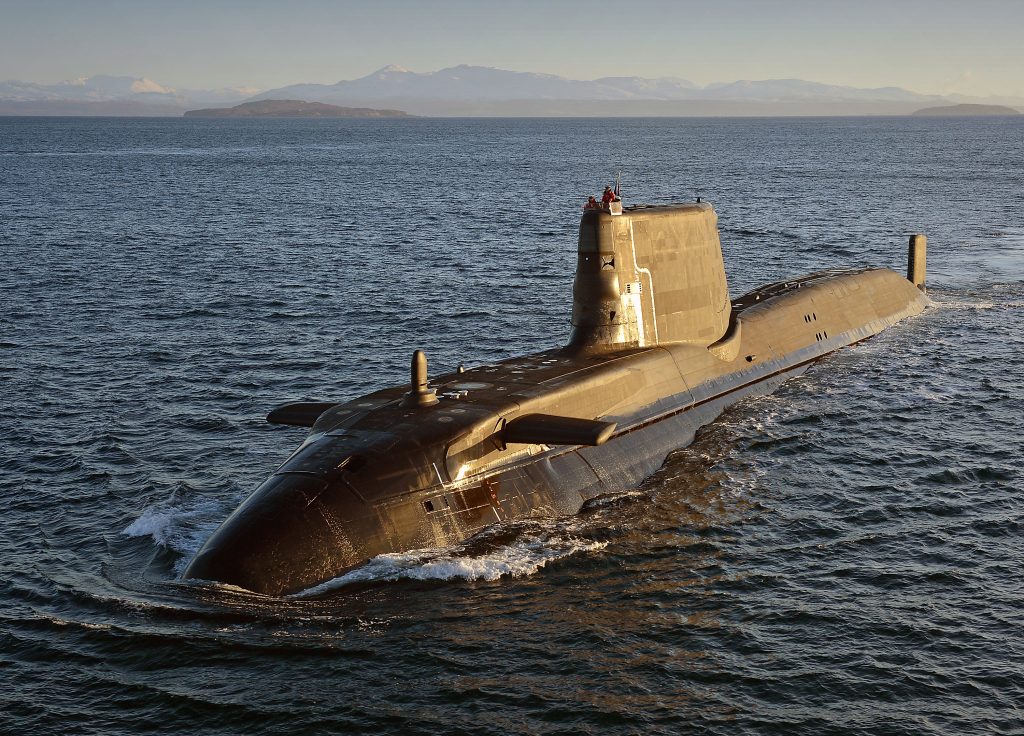
(Photographer: LA(phot) Will Haigh; Copyright: UK MOD © Crown copyright 2022.)
Adequate resources are, as discussed above, a precondition for the project to proceed with alacrity. The right kind of money27 – in sufficient quantity (including adequate provision for risk and uncertainty), in the right financial years, with the authority to spend it – is essential if that money is to be turned into fieldable military capability with the minimum of friction. The annual revisiting of finance to manage scarcity across the portfolio must be avoided. That is not to say that programmes should be profligate or wasteful – discipline in achieving value for money is essential – but programmes that are continually fighting descoping, deferral and/or the threat of deletion will not deliver promptly.
The other essential resource is people with the right skills and experience to deliver the programme. Many Defence acquisition programmes are hamstrung by the lack of competent and empowered people to do the work and hold the necessary delegations. It is worth noting that this need changes over the lifecycle of the project. The competencies needed at project start-up differ from those needed through contract management and differ again from those required to manage transition into service. Appropriately resourced teams (recruitment should be ahead of the workload, not behind it) are vital to ensure timely completion of project processes and assurance to the right quality.
And such people should be properly enabled. Too often in Defence, minor frictions, such as availability of Travel and Subsistence budgets or office space/meeting rooms cause outsized effects on the efficiency and efficacy of project delivery. Of course, it’s never one ‘hygiene factor’ that tips the project into the red, but an accretion of small decisions aggregates and affects both the culture and the overall outcome. Getting the small things right is fundamental.
The culture itself needs to be one of strong psychological safety, a prerequisite for a high-performing team.28 A clearly communicated vision for the programme, a learning culture, empowerment and positive leadership behaviours are all vital components of a culture likely to maximise the probability of delivering a successful programme. This culture should extend across organisational and commercial boundaries. In general, conversation should lead negotiation such that problems are solved collaboratively and on a ‘best for programme’ basis, with the commercial function and contracts acting as enablers, not drivers, of behaviour.
Contracting mechanisms and procurement strategies should be carefully considered to allow the right level of collaborative delivery, whilst maintaining proper commercial incentives to perform the agreed contracts. This is especially important as 45% (by value) of MOD contracts are awarded on a non-competitive basis.29 Such single-source arrangements also risk stifling innovation if not properly incentivised and certainly mean that the proportion of the market that is open to disruption by new entrants is limited.
Many Defence acquisition programmes are hamstrung by the lack of competent and empowered people to do the work and hold the necessary delegations. Appropriately resourced teams are vital to ensure timely completion of project processes and assurance to the right quality. And such people should be properly enabled.
With a clear objective; sufficient funding; adequate schedule and financial risk provision; an empowered and experienced leader; a resourced and competent programme/project management team; and the right commercial arrangements in place, it is the governance and processes that will knit these factors together into a coherent and successful delivery system. There are a number of different methodologies, each appropriate to different types of project. Some have zealous proponents who insist that their favoured methodology is the cure of all delivery ills. This is nonsense. The important thing is less the specific methodology chosen than that it is applied with diligence, skill and in accordance with the established principles of good project delivery. Like the organisation of the Ministry of Defence, the best thing to do is pick a model that is good enough and then get on with it!
Conclusion
The persistent challenges in UK defence procurement are not predominantly the product of flawed organisational charts or a lack of reform effort but rather of deeper, systemic issues that have remained largely unaddressed. The evidence suggests that success is less about designing the perfect structure and more about enforcing discipline in decision-making, realism in planning, and accountability in delivery. Overcommitment, optimism bias, and the diffusion of authority combine to create a system that is simultaneously risk-averse in process and risk-exposed in outcome.
Fundamentally, the Ministry of Defence must make harder choices earlier: about what it will do, what it will not do, and what it can genuinely afford. This requires political resolve as much as institutional change. Empowering capable Senior Responsible Owners, aligning authority with accountability, and enabling informed risk-taking are essential if the system is to favour timely, ‘good enough’ delivery over procedurally perfect failure.
There is no shortage of knowledge about how to deliver complex programmes successfully. The failure is not intellectual but behavioural. Until incentives, culture, and leadership expectations are aligned with the realities of delivering with alacrity despite uncertainty, reform efforts will continue to recycle familiar problems. Effective procurement is achievable – but only if Defence confronts these truths and acts on them decisively.
1. Collins, J., (n.d.), The Stockdale Paradox.
2. Integrated Procurement Model, UK Ministry of Defence, 2024.
3. Money (of the right type in the right years with the authority to spend it); uniformed workforce to crew the capabilities; and the institutional and industrial capacity to deliver the volume of change at the speed required.
4. Knowledge in Defence, UK Ministry of Defence, (n.d.), Common terms used in acquisition.
5. Usually defined as major projects with a value of over $1Bn.
6. Flyvbjerg, B., & Gardner, D., How big things get done: The surprising factors behind every successful project, from home renovations to space exploration, Macmillan, 2023.
7. Professor Matthew Uttley, ‘Change Management in Military Organisations’, Lecture, Kings College London, Serbian Defence Academy, April 9, 2013.
8. “Culture eats strategy for breakfast” was a management slogan written and promoted by Mark Fields, President of Ford The Americas, October 2005 – December 2012. (The remark is often attributed to Peter Drucker.)
9. “A function is a grouping aligned across Government to manage functional work such as human resources, commercial, or finance. Functions are embedded in departments and arm’s length bodies.” (‘Guidance: Government Functions’, updated November 2025.)
10. A geometric or natural pattern that repeats itself at different scales.
11. Functional process owners (or owners of the process) are, for example, the people who own the Commercial, HR or Safety processes in the Civil Service.
12. Taleb, N. N., The black swan: The impact of the highly improbable, Random House, 2007.
13. Taleb, N.N., Antifragile: Things That Gain From Disorder, Penguin Books, 2013 p.7.
14. In 2010 the Secretary of State for Defence asked Lord Levene, a former Chief of Defence Procurement, to review the structure and management of the MOD. His Defence Reform report (June 2011), set out 53 recommendations.
15. Flyvbjerg, B., Garbuio, M., & Lovallo, D., Delusion and deception in large infrastructure projects: Two models for explaining and preventing executive disaster. California Management Review, 2009, 51(2), 170–193.
16. The Defence Reform programme intends to do away with this. There will, inevitably, be something that replaces it and performs the same function.
17. Dahl, M., Everything Always Takes Longer Than You Think, Science of Us, 2017, accessed 24 Apr. 2017.
18. Burkeman, O., Oliver Burkeman on why everything takes longer than you think, the Guardian, accessed 24 Apr. 2017.
19. Defence Portfolios are the strategic planning lens to enable portfolio directors and capability sponsors to work together to ensure optimisation of value from the portfolio and systemic integration across their portfolio. Portfolio Directors will lead these portfolios and will be empowered to take decisions that optimise the value of their portfolio.
20. Lovallo, D., & Kahneman, D., Delusions of success: How optimism undermines executives’ decisions, Harvard Business Review, 81(7), 2003, 56–63.
21. Rumsfeld, D., There are known knowns [Press briefing]. U.S. Department of Defense, February 12, 2002.
22. Tetlock, P. and Gardner, D., Superforecasting: The Art and Science of Prediction, Random House Books, 2016, p153.
23. Blanchard, K. H., Oncken, W., Jr., & Burrows, H., The One Minute Manager Meets the Monkey, William Morrow & Company, 1989.
24. The Teal Book: Project delivery in government (Version 2.0), HM Treasury, April 2025.
25. Paul Chapman, ‘Project delivery performance: Insights from English roads major schemes’, Project Leadership and Society, Volume 5, 2024, accessed 6 May 26.
26. James Odeck, ‘Beyond the narrative of failure: Road project cost overruns are manageable’, Project Leadership and Society, Volume 7, 2026, accessed 6 May 26.
27. The Government distinguishes between Resource money and Capital spending. You need the right amount of each, in the right financial years to spend on the things that you need to do/buy to achieve the project aims.
28. Psychological safety in MOD programmes: Creating the environment for our projects to succeed, UK Ministry of Defence, July 2022.
29. UK Ministry of Defence, Accredited official statistics: MOD trade, industry and contracts: 2025’, updated 12 March 2026, accessed 6 May 26.