‘We aren’t little people we are children’
The subtitle of this piece is a quote from a Reception aged child. It was said to me when I was visiting his large, five form entry school. I saw all the children coming back from lunch and commented on the long line of ‘little people’ coming towards me. A little boy left the line and came over to me. I bent to listen to what he was saying and what he said has left an impression on me, and influenced my work, to this day. He was not being rude or cheeky, but the point he made was significant and said something about the ethos of the school.
It was a significant point because this four-year-old child had eloquently pointed out, and summed up, to me something that was so obvious. But something that I suddenly realised is so often overlooked in a policy culture that assumes a ‘one size fits all’ agenda in which our youngest children are seen as ‘pre-school’, at ‘playgroup’ or being prepared to be ‘school ready’. These labels suggest that the children are not yet complete and that this will only happen when they enter Key Stage One when there is a perception that real ‘school’ starts.
So why is this the situation in which we find ourselves? In my work with teachers around the country I always ask three core questions —
- What is your role as ‘teacher’?
- What is the role of the child?
- Whose agenda is it?
All of these were triggered by the little boy and his observation to me all those years ago. Too often we, often unconsciously, create a culture in the classroom where children develop ‘learned helplessness’. By this I mean that we make the assumption that the children are not capable of developing new skills and learning unless an adult tells them what to do. Gradually the child feels that they cannot do something without asking first. The adult agenda becomes the rule. I would argue that this is true throughout the education system, but it commonly starts in Early Childhood Education and Care (ECEC). Why is this? Why is it assumed that anything that happens before Key Stage One is about adults preparing and forming children to be ‘school ready’. Because, until that is done, they are seen to be as a friend of mine says ‘becomings not beings’
What are we missing? How did we get here?
What we are missing is an informed viewpoint of the child. The child that is a fully formed being with opinions, views, agency, ideas, knowledge and understanding. Often bringing with them funds of knowledge about subjects and questions that we have never considered.
Despite the large amount of peer reviewed research and well-respected books currently available, anecdotal experience suggest that teachers in Early Childhood Education and Care are now split into two camps. This was well summed up by Loris Malaguzzi in a paper —
“The environment you construct around you and the children also reflects this image you have about the child. There’s a difference between the environment that you are able to build based on a preconceived image of the child and the environment that you can build that is based on the child you see in front of you — the relationship you build with the child, the games you play.”1
It is this ‘preconceived image’ of the child that has become increasingly prominent with the rise of social media and ‘off the peg’ schemes and curricula. With these influences on our practice and provision, informed research and thinking is often lost or worse, dismissed.
In 1967 a seminal document was published — Children and their Primary Schools. A Report of the Central Advisory Council for Education (England). This is more commonly known as The Plowden Report.
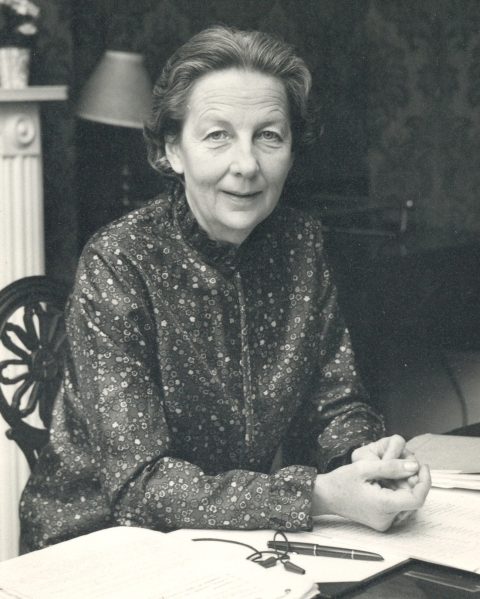
Although now over fifty years old, this document is the best starting point to reflect on the relationship between policy and practice, what is missing, and how we got to where we are now. This is for two reasons;
- It is a policy document that reflected children’s needs and how schools should respond to them;
- Many more recent initiatives — most notably the development of the National Curriculum, the Statutory Framework for the Early Years Foundation Stage, The Early Years Foundation Stage Profile and the Reception Baseline Assessment — have been as a direct result of what could be seen as misinterpretation of the recommendations of Plowden (CACE 1967).
The Plowden report begins with a section on the importance of understanding child development before we make ill-informed assumptions about a group of children and their capabilities. Teachers must be “adaptable in their approach to individuals”.2
An importance is put on how beneficial all types of early learning are considered to be, and how these should be organised to maximise the potential of all children, “The child must come first”3. It is important to note here that appropriate education in the early years is seen as crucial to later life. The Plowden committee was very concerned that play and creative work was not “sacrificed” to “formal work”4.
This is interesting as since then it is the play and creative work that is/has been chipped away through subsequent years and policy. We are now in a place where we have a document — Early years foundation stage statutory framework For group and school-based providers Setting the standards for learning, development and care for children from birth to five (14 July 2025 and effective from 1 September 2025) — which reads:
“The EYFS sets the standards that all early years providers must meet to ensure that children learn and develop well and are kept healthy and safe. It promotes teaching and learning to ensure children’s ‘school readiness’ and gives children the right foundation for good future progress through school and life.” (my emphasis)
We have arrived at this agenda of ‘school readiness’ via years of change to the education system that have focussed on developing a national curriculum from Year One. This has gradually seen Early Childhood Education and Care (ECEC) isolated and suffering from a ‘top down’ approach. The recent Curriculum and Assessment Final Review (November 2025) has continued this trend by reviewing the National Curriculum and that for 16- to 19-year-olds without reflecting on how Early Childhood Education and Care underpins it all. This is an error of judgement which will be reflected upon in this piece.
The Education Reform Act (1988) irrevocably changed the way education is viewed in England. Although it did not specifically mention education in the Early Years, it is of importance in this context because it proposed the new National Curriculum which was to start at the age of five.
I was a Reception class teacher at the time, and I along with many others felt unsure about the place of four-year-olds in the National Curriculum. They were not mentioned — yet there were implications for them and what and how they were taught. I recollect that many Early Years teams in schools tried to interpret the new National Curriculum documents in order to make them work in Reception classes where four-year-olds and five-year-olds were taught together.
The subsequent publication of Starting with Quality (The Rumbold Report, DES) in 1990 emphasised the importance of the experiences in the early years —
“What is of prime importance is that the curriculum should be coherent in terms of the child’s existing knowledge, understanding and skills, and that it should be experienced in an environment which fosters the development of social relationships and positive attitudes to learning and behaviour.”5
But to no avail. This important message has been constantly sidelined. We have now been through the literacy and numeracy strategies, the introduction of ‘synthetic phonics’ programmes, commercially produced maths schemes, commercially produced curricula, several iterations of our Statutory Framework, and all sorts of shiny social media posts and pictures. Much of this was, and is, not statutory but has had a massive and lasting impact on what has happened for children between birth and age seven.
What is missing is that the profession has fallen into the role of being implementers of policy rather than leaders of change. More recently we have seen Ofsted and DfE publishing ‘guidance’ documents which many take to be policy and the influence on practice and provision is instant. For example, Bold Beginnings (2017) began to influence how schools saw the importance of play. And more recently (2025) we have the publication of The Writing Framework which, although only guidance, is having a major impact on how leaders are expecting to see the skill of writing taught in Reception classes. Teachers of children in Early Childhood Education and Care feel powerless as Senior Leads begin to require types of practice that do not fit with knowledge of child development and neuroscience.
There are many reasons for this. Some can be related to lack of experience, qualifications and training, and some to leaders in schools not valuing Nursery and Reception Classes in the same way as Year Six. Much of this is related to how successive governments have viewed Early Childhood Education and Care.
So what can we do?
The answers here sound easy, and as I write I wonder at the fact that we are still having this conversation. I am a member of two national organisations who have been engaged in this conversation for a lifetime. Change is still slow to happen, but it is out there, and children are achieving remarkable results from being enabled to learn in developmentally informed practice and provision. And none of this is in breach of the 2025 Statutory Framework. Which has its faults but, if read thoroughly and reflected upon, will support a much more informed approach.
However, not unsurprisingly, teachers feel trapped into implementing regimented phonics and maths schemes. They cost a lot of money to buy in, come with a huge amount of training, resources and presentations and promise the world. So there is an obligation to use them when the school has splashed out. But these schemes rely on a ‘one size fits all approach’, and none of this is statutory.
Of course we must teach children to be literate and numerate, but these schemes often artificially limit what is learnt. As far back as 1912 Maria Montessori noted how a rigid curriculum has an impact on behaviour —
We know only too well the sorry spectacle of the teacher who, in the ordinary schoolroom, must pour certain cut and dried facts into the heads of the scholars. In order to succeed in this barren task, she finds it necessary to discipline her pupils into immobility and to force their attention. Prizes and punishments are every-ready and efficient aids to the master who must force into a given attitude of mind and body those who are condemned to be his listeners.”6
And this concern was reflected in the 1990 Rumbold Report mentioned earlier. The overriding concern of that report was the issue of quality of provision for young children, with the stress being on the content of the learning and the way in which learning experiences were offered to children.7
We can rebalance this. Schools around the country are realising — remembering? — that phonics and maths can be taught very successfully without recourse to expensive and rigid systems. And where these systems are in place then they can be used as a starting point and developed for the children, so avoiding the ‘keep up, not catch up’ mantra.
It is vital to remember that some children start school when they are only just four years old, while others are already five. At this point in life that is a huge difference of life experience. And stages of development both physically and emotionally. Whilst we cannot, and should not, generalise about summer-born children we must take into account that all children bring different experiences and funds of knowledge with them. Thus their starting points are all different. Many come to school already able to read, and/ or confident with numbers. Many do not. Our Statutory Framework actually allows for this with its emphasis on the ‘Unique Child’.
And this is where the problem lies. The Bold Beginnings (2017) document mentioned above contains these interesting statements —
“Reception is commonly referred to as the first year of school but, unlike other school years, it is not compulsory. In England, formal schooling does not start until the school term following a child’s fifth birthday. Despite this, nearly all parents decide to send their child to Reception.
Nearly 95% of the school staff who responded to Ofsted’s survey questionnaire believed that Nursery and/or Reception signalled the start of school. Leaders clearly believe that the moment a child starts attending their school, in whatever capacity, their educational journey has begun. While Year 1 may be the official start, it is clear that the Reception Year is more commonly recognised as the beginning of a child’s formal education.
The term ‘Reception’ refers to leaders and staff ‘receiving’ children into their school. While many children will have already had some form of preschool provision, the Reception Year is often their first experience of full-time education. It is a time when leaders and staff establish the rules, routines and expectations of learning that will serve children well and follow them through the rest of their formal schooling.”8
Notice the emphasis on how the Reception year is not seen as the start of ‘formal schooling’. Whilst it is true that, in England, children are legally expected to start school the term after their fifth birthday, many now start much earlier. And this is where the tension lies — in the lack of understanding that an informed knowledge of child development is vital to work with children from birth to seven. As children grow this understanding is less significant as they are more resilient and have more knowledge of the world. Physically they are further on in their development, meaning that skills, such as holding a pencil, have become more manageable.
Those in charge of policy and guidance must start to recognise this. If younger and younger children continue to start in school settings, then ‘school’ must be seen to be one coherent experience. And the Early Years Foundation Stage Statutory Framework must be seen as the first Key Stage that underpins Key Stage One.
For this to happen there must be an urgent review of the terminology used to describe those working with the youngest children — in whatever setting. This is set out well in a report from Early Education in November 2025:
“These terminological inconsistencies have far-reaching implications. The use of the term ‘childcare’ often diminishes professional recognition, associating the work with low qualifications and ascribing lower status to caregiving than education. Funding disparities between school-based and PVI settings exacerbate sectoral inequities, while differing professional requirements, inspection models, and curricula across the UK create a fragmented system. Most critically, early years has often been a lower government priority compared to primary and secondary education, stalling long-term investment in workforce development and professionalisation, notwithstanding that in Scotland there has been a strong early years policy focus since 2008.”9
Primarily this report is about workforce strategies, but the implications for policy are clear, policymakers must acknowledge that piecemeal reforms and underfunded initiatives have failed to deliver lasting change. If we are to rebalance the system, then the emphasis must be on all those working with the youngest children having an informed grounding in child development. This means that Headteachers and Senior Leaders in schools, who may not have this knowledge themselves, must be sure that those they appoint for Nursery, Reception and even Year One roles are appropriately informed. And good continuous professional development must be available so that these teachers are kept up to date which the latest knowledge of neuroscience and physical development. This will mean that Early Childhood Education and Care must be seen as a specialist area rather than one where a perceived weaker teacher can be moved to as they ‘will do less damage there’.
These are conversations that need to be held. It is not only the children that deserve, and are capable of, agency and empowerment. It is the professionals who teach them too.
1. Your Image of the Child: Where Teaching Begins, Loris Malaguzzi, 1994: https://sightlines-initiative.com/
2. Children and their Primary Schools. A Report of the Central Advisory Council for Education (England), 1967, p. 10.
3. Ibid, p. 138.
4. Ibid, 1967, p. 139.
5. Starting with Quality, 1990, p. 9.
6. Maria Montessori, The Montessori Method, Chapter 1, p.21, Schocken Books, Inc., 1964.
7. Starting with Quality, 1990, p. 9.
8. Bold beginnings: The Reception curriculum in a sample of good and outstanding primary schools, Ofsted, 2017, p. 8.
9. ‘It is rocket science: professionalising the early childhood workforce in the UK: Final report from the Comparative analysis of early years workforce policy in the four UK nations (EYW4N) project’, p. 8.